Please Follow us on Gab, Minds, Telegram, Rumble, Truth Social, GETTR, X, Youtube, Instagram
With Amendment 3 written into the state constitution, Florida leaders are eyeing full elimination of homestead property taxes—backed by state surpluses, tourism sales tax revenue, and a mandate to rein in bloated local spending.
For nearly eight millennia, governments have operated on a simple, inescapable reality: land cannot pack its bags and move across state lines.
In ancient Sumeria, temple administrators used clay tablets to assess rotational taxes on fields and livestock. In Egypt, royal scribes measured Nile farmland after every flood to calculate what farmers owed the Pharaoh. Rome’s Emperor Augustus standardized an annual 1% levy on land value, and in 1086, William the Conqueror compiled the Domesday Book to ensure no parcel in England escaped the Crown’s reach. When the Pilgrims and Puritans landed in New England in the 1600s, they brought that same centuries-old fiscal machinery with them.
For thousands of years, the underlying bargain never changed: you might hold the deed, but if you fail to pay the sovereign’s annual tribute, the tax collector can slap a lien on your land and take it away. Even after paying off a 30-year mortgage, homeowners remain perpetual tenants—renting their own property from the government.
In Florida, that ancient arrangement just collided with modern reality—and voters decided they had had enough.
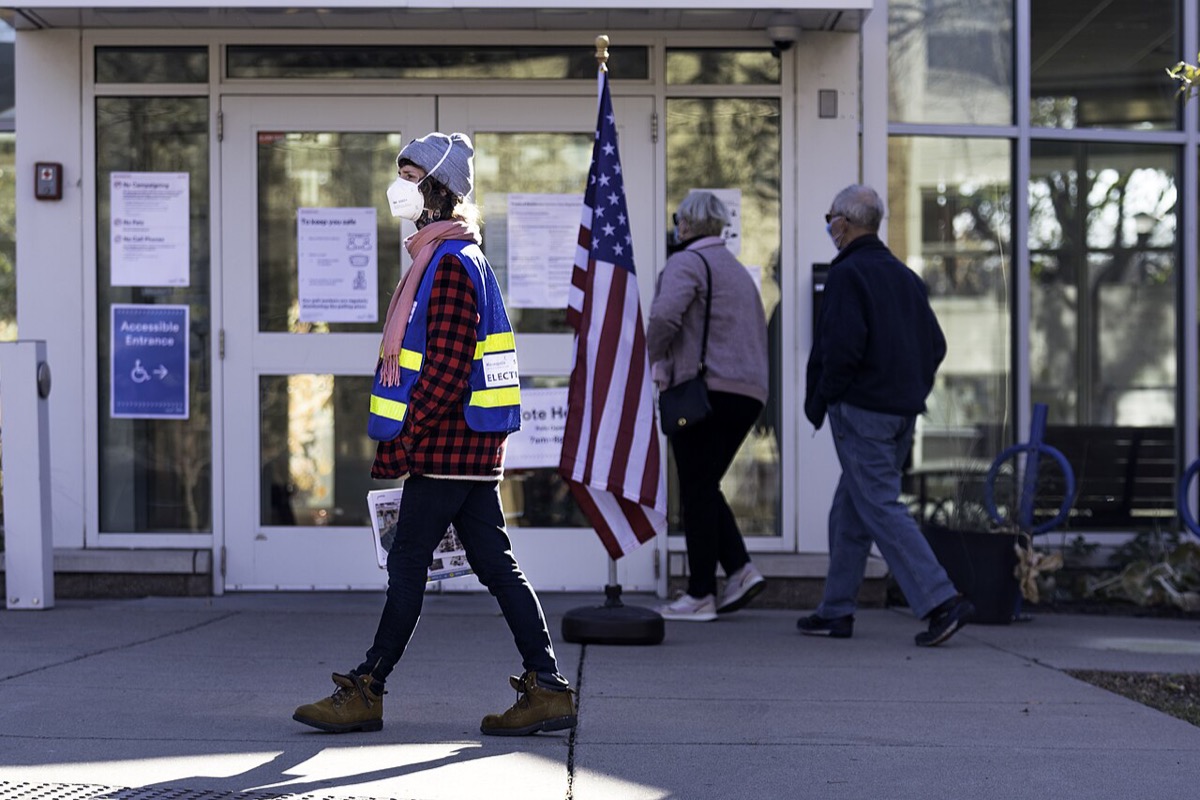
On November 3, Floridians approved Amendment 3, a sweeping constitutional overhaul that triples the state’s non-school homestead exemption to $150,000 in 2027 and $250,000 in 2028, cuts the annual assessment cap on non-homestead properties in half from 10% to 5%, and places strict constitutional guardrails on how local governments spend property tax dollars.
Yet as far as Florida’s political leadership is concerned, Amendment 3 is only the opening salvo.

“Perpetual Renters” and the Kitchen-Table Breaking Point
Post-pandemic real estate appreciation turned Florida’s property tax system into a slow-motion financial squeeze. Even with the state's “Save Our Homes” cap limiting annual assessment hikes to 3% for existing homesteads, skyrocketing market values—compounded by rising property insurance and HOA fees—pushed annual escrow bills into territory that seniors and fixed-income Floridians simply could not absorb.
Supporters of the measure framed the fight not merely as a tax cut, but as a defense of actual property ownership.
“Our nation was forged by pioneer patriots who left everything behind and risked their lives for the dream of living in freedom on their own piece of property,” said Sen. Bryan Avila (R-Miami Springs), the Senate sponsor of the amendment, during the legislative push. “We agree with Governor DeSantis that having to continually pay the government for the right to live on your own property flies in the face of that dream.”
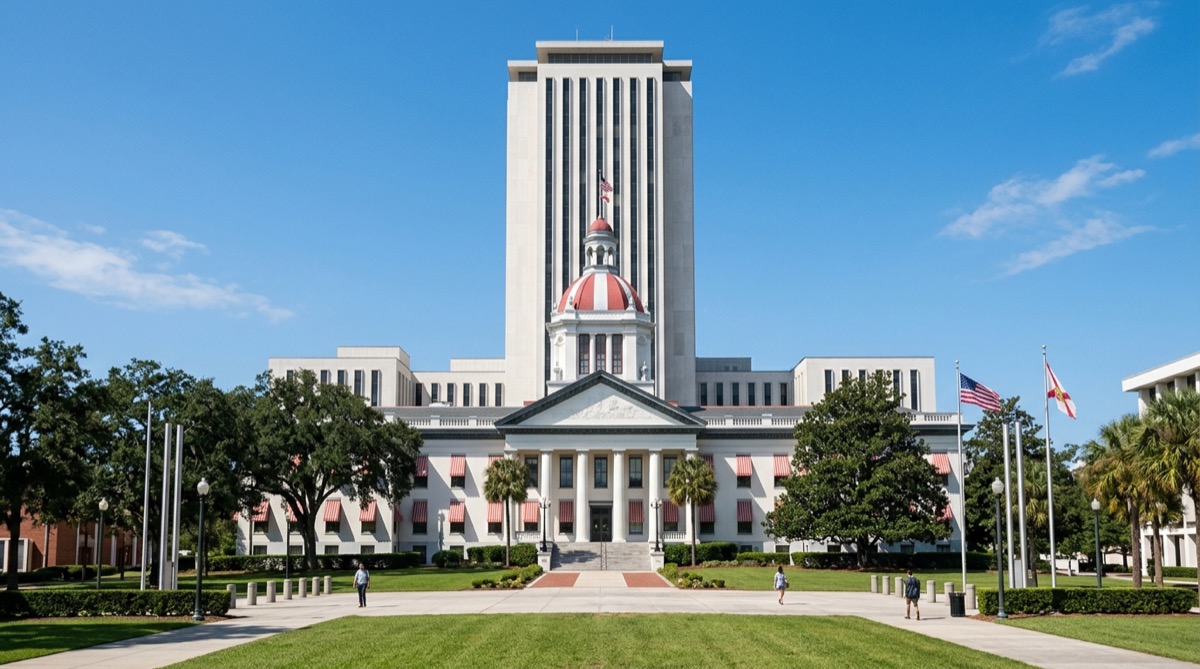
Gov. Ron DeSantis, who called lawmakers back to Tallahassee for a special session earlier this year to put the measure on the ballot, argued that local governments had become addicted to windfall revenue generated by inflated home values—even when commissioners claimed they weren't raising millage rates.
“If the amendment passes, people have more money in their pocket,” DeSantis said ahead of the vote. “You are going to have a better economy locally because they are going to be able to breathe. They are going to be able to spend money.”
Following the measure's passage, DeSantis signaled plans for a special legislative session to implement the amendment and ensure local officials cannot bypass the relief through backdoor fees or assessments. Meanwhile, incoming leadership has already telegraphed that the push toward full elimination of homestead property taxes remains squarely on the table—provided the state’s fiscal math holds.
The Alachua County Paradox: Top-Dollar Taxes, Bottom-Tier Roads
Nowhere is the disconnect between what Floridians pay and what they receive more glaring than in Alachua County.
According to U.S. Census Bureau American Community Survey data, Alachua County carries the highest effective property tax rate of all 67 counties in Florida at roughly 0.96%—well above the statewide average of 0.76% and even higher than the national average of 0.92%. Between 2020 and 2024 alone, the county’s median property tax bill surged 27.1%. When combined with municipal and school levies, total millage rates in Alachua County hover around 16.56 mills (and higher inside certain city limits), costing the owner of a newly purchased $350,000 homesteaded home roughly $5,147 a year.
Yet ask any resident driving through Gainesville or the unincorporated county what those nation-leading rates have bought them, and you will hear the unofficial local mantra: “If property taxes are so high, why are the roads so bad?”
The numbers back up the frustration. By the county’s own engineering assessments, roughly 84% of Alachua County’s road network has been classified as needing rehabilitation or full reconstruction, weighed down by decades of deferred maintenance and a pavement backlog estimated at roughly $500 million. Even after voters approved a dedicated surtax to generate roughly $25 million a year for road repairs, critics note that amount barely covers half of the annual maintenance needed just to stop the network from deteriorating further—let alone erase a half-billion-dollar backlog. Yet the county commission continues to approve rapid development that is not supported by infrastructure in the county.
To fiscal conservatives, Alachua County is Exhibit A in the case against municipal bloat: a local government that collects top-tier taxes while letting core infrastructure crumble, all while funding administrative growth and non-essential pet projects. That is precisely why Amendment 3 includes a constitutional mandate restricting counties and cities to spending remaining property tax dollars strictly on core services—public safety, infrastructure, flood control, education, debt service, and employee retirement.
How Florida Can Afford It—And What Critics Warn Will Happen
Opponents of Amendment 3—including municipal lobbyists, public-sector unions, and progressive policy groups—have painted a bleak picture of what happens next. State economists with the Revenue Estimating Conference projected that the measure will reduce local government revenues by roughly $4.9 billion in FY 2027–28, growing to nearly $11.8 billion annually once fully phased in.
Critics argue those cuts will inevitably force cities and counties to slash local services or hike other taxes and fees to fill the gap.
“Lipstick on a pig is what we're looking at,” said State Sen. Shevrin Jones (D-Miami Gardens) in opposition to the measure. “This is not a tax relief. This is a tax shift—you might not pay it on this, but you're going to pay it on that.”
Policy analysts at the Florida Policy Institute echoed that warning, arguing that the measure leaves out the state's roughly 3 million renter households. “If the amendment passes, costs will shift, as local lawmakers either cut public services or increase other taxes and fees to make up for the loss in revenue,” wrote Florida Policy Institute analyst Esteban Leonardo Santis.
Proponents of deeper property tax elimination, however, argue that critics are ignoring two massive fiscal realities:
Florida’s Economic Engine and Surplus Strength: Fueled by years of historic population growth, corporate relocations, and record tourism, Florida has consistently posted multi-billion-dollar state budget surpluses while keeping state debt among the lowest in the nation. Unlike property taxes—which punish retirees and fixed-income residents regardless of their cash flow—Florida’s consumption-based sales tax captures billions of dollars directly from the tens of millions of tourists who visit the state every year.
Cutting Fat Before Raising Taxes: Supporters maintain that local governments do not have a revenue problem; they have a spending problem. During the post-2020 real estate boom, property valuations exploded across Florida, flooding county and city coffers with automatic revenue increases. Rather than rolling back millage rates to keep tax bills flat, most local commissions kept rates steady and pocketed the windfall.
As then-gubernatorial candidate Byron Donalds pointed out on the campaign trail earlier this year, local governments had every opportunity to return that windfall to taxpayers on their own. “A lot of our counties, not all, but a lot of them, when property values were increasing the last seven years, they could have gone to a rollback rate to smooth out tax increases,” Donalds said. “They did not do that. They let their budgets increase very steadily, very handsomely... And what they were telling people was: 'We're just going to leave the millage the same. We're not raising taxes,' even though property values shot up.”
The Road Ahead
For an average Florida homeowner with a $350,000 house, Amendment 3 is projected to save roughly $1,800 to $2,085 a year once the $250,000 exemption takes full effect in 2028—meaningful breathing room, though school district levies remain untouched.
More importantly, the amendment forces the Legislature to establish a formal statutory pathway for local governments and special districts to raise exemptions all the way to 100% of a home's assessed value.
For 8,000 years, the tax collector has held the upper hand over the homeowner. With Amendment 3 now written into the Florida Constitution, the Sunshine State has launched the boldest experiment in modern American public finance: proving that a thriving, no-income-tax state can rein in local bureaucracy, leverage a booming tourism economy, and finally let homeowners own their land free and clear.