Please Follow us on Gab, Minds, Telegram, Rumble, Truth Social, Gettr, X, Youtube, Instagram
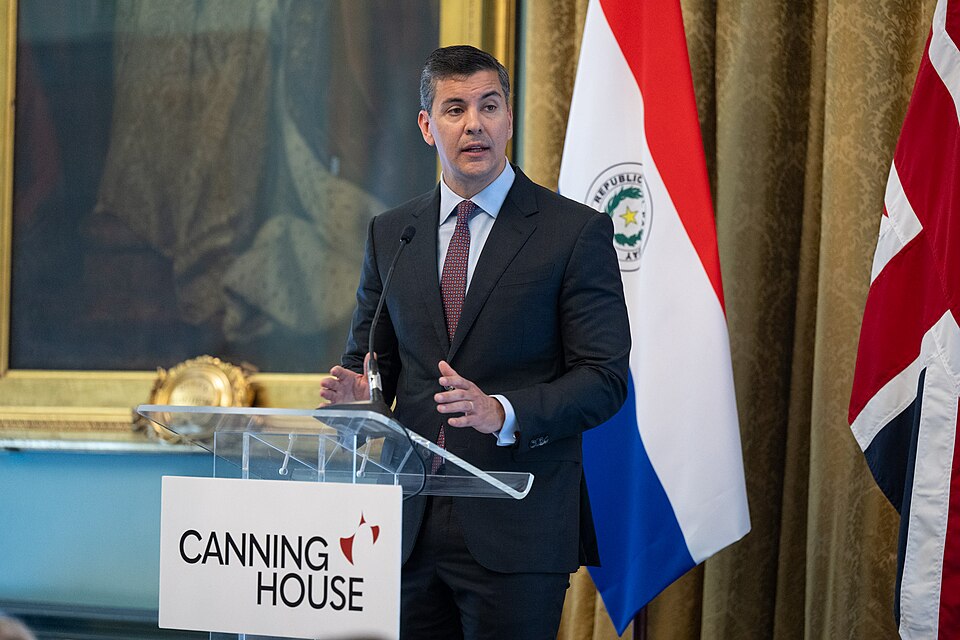
Paraguayan President Santiago Peña announced his resignation on Thursday amid a deepening political and financial crisis triggered by the collapse of digital lender Ueno Bank, which froze access to savings, wages, and pensions for roughly 3 million customers—nearly 60% of the country’s adult population in a nation of about 6.5 million people.
In a video posted to X, Peña said he was stepping down to preserve national stability, social peace, and democratic institutions. He emphasized that his priority was protecting Paraguayans who had entrusted their savings to the financial system and offered an apology if he had failed the public at any point.
The Central Bank of Paraguay (BCP) initiated resolution proceedings for Ueno Bank earlier in the week after determining that the lender’s solvency ratio had fallen below half the regulatory minimum of 12% (reported at approximately 5.56% following accounting adjustments). Regulators cited poorly documented loans to companies linked to the controlling shareholder, Grupo Vázquez, and expenses incorrectly booked as assets. The bank’s operations, including its app, cards, and transfers, were suspended, locking out depositors.
Ueno had grown rapidly since 2021 into one of Paraguay’s largest financial institutions. It held roughly $800–850 million in public funds, including significant deposits from the state pension and health system (around $380 million) and other government entities. Authorities have described the case as isolated and not indicative of systemic risk to the broader banking sector.
Peña faced intense scrutiny over his former ties to the bank. He held a stake in a company linked to Grupo Vázquez until March 2025 and, after taking office in August 2023, appointed Carlos Carvallo—who had previously led Ueno’s predecessor—to head the central bank that supervised the lender. Carvallo resigned amid the crisis at Peña’s request. Peña has denied wrongdoing, stating the issues began as a regulatory matter before escalating politically. The ruling Colorado Party, including former President Horacio Cartes, withdrew support.
Hours after Peña’s resignation announcement, the lower house of Congress voted unanimously (78-0) to impeach him. Subsequent Senate action removed him from office. Vice President Pedro Alliana was sworn in to complete the remainder of the term ending in 2028. Peña was later placed under house arrest on suspicion of breach of trust as prosecutors opened multiple investigations into the crisis, including oversight of the bank and placement of public funds.
Authorities detained several Ueno executives, including Grupo Vázquez president Miguel Vázquez and bank president Juan Manuel Gustale. A court ordered pretrial detention for six and house arrest for two others. Prosecutors charged 27 bank officials and associates with breach of trust and attempted fraud. Protests erupted in Asunción, with depositors, pensioners, and workers demanding the return of their funds and accountability.
The central bank began deposit guarantee payments, starting with eligible clients holding balances of up to 10 million guaraníes (roughly $1,630) who met certain conditions, such as holding accounts at other institutions and having no outstanding debts to Ueno. Paraguay’s deposit insurance covers up to approximately 228.3 million guaraníes (around $37,000–$38,000) per depositor per institution, sufficient for the full balances of an estimated 97% of clients. A law accelerated repayment timelines.
Some Paraguayans turned to cryptocurrency for liquidity. Local exchange operators reported customers converting holdings to guaraníes or dollars to cover expenses, while demand for dollar-backed stablecoins rose amid restricted bank access. Tether CEO Paolo Ardoino noted the role of USDt as a tool for people seeking alternatives in such situations.
Peña, an economist and former IMF official elected in 2023, had been serving a five-year term. The crisis has rattled a country that recently secured investment-grade credit ratings and strained political alliances, including Paraguay’s longstanding ties with Taiwan. Markets reacted with declines in sovereign bond prices and pressure on the guaraní.
Authorities continue the resolution process, asset recovery efforts, and criminal probes while depositors await further payouts and account transfers. The events mark one of the most significant banking and political upheavals in Paraguay in recent years.