


Please Follow us on Gab, Minds, Telegram, Rumble, Truth Social, Gettr, X, Youtube, Instagram
By Alfredo Alonso, Guest Contributor
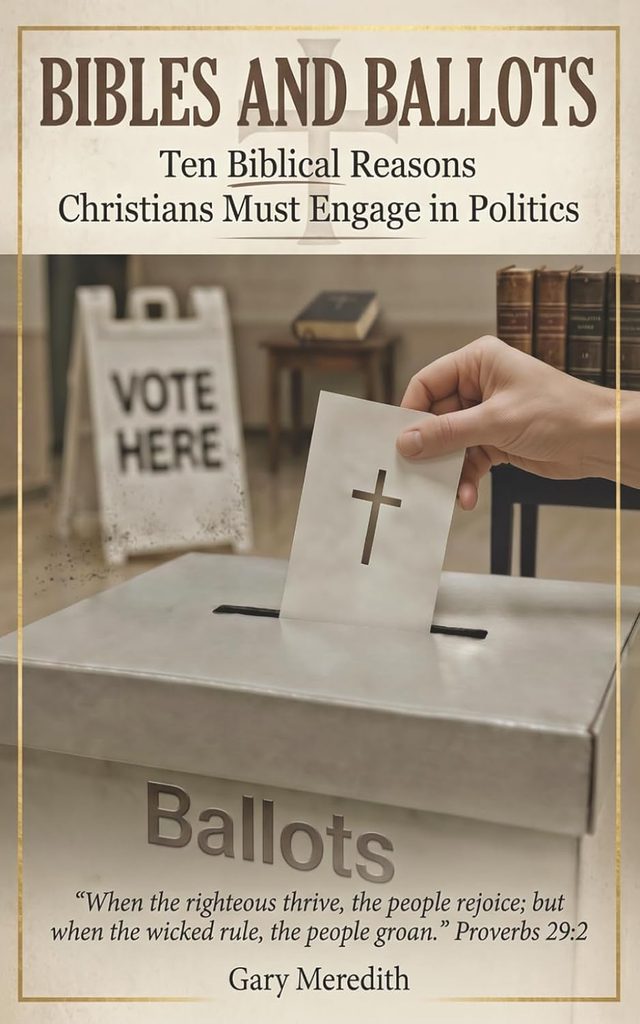
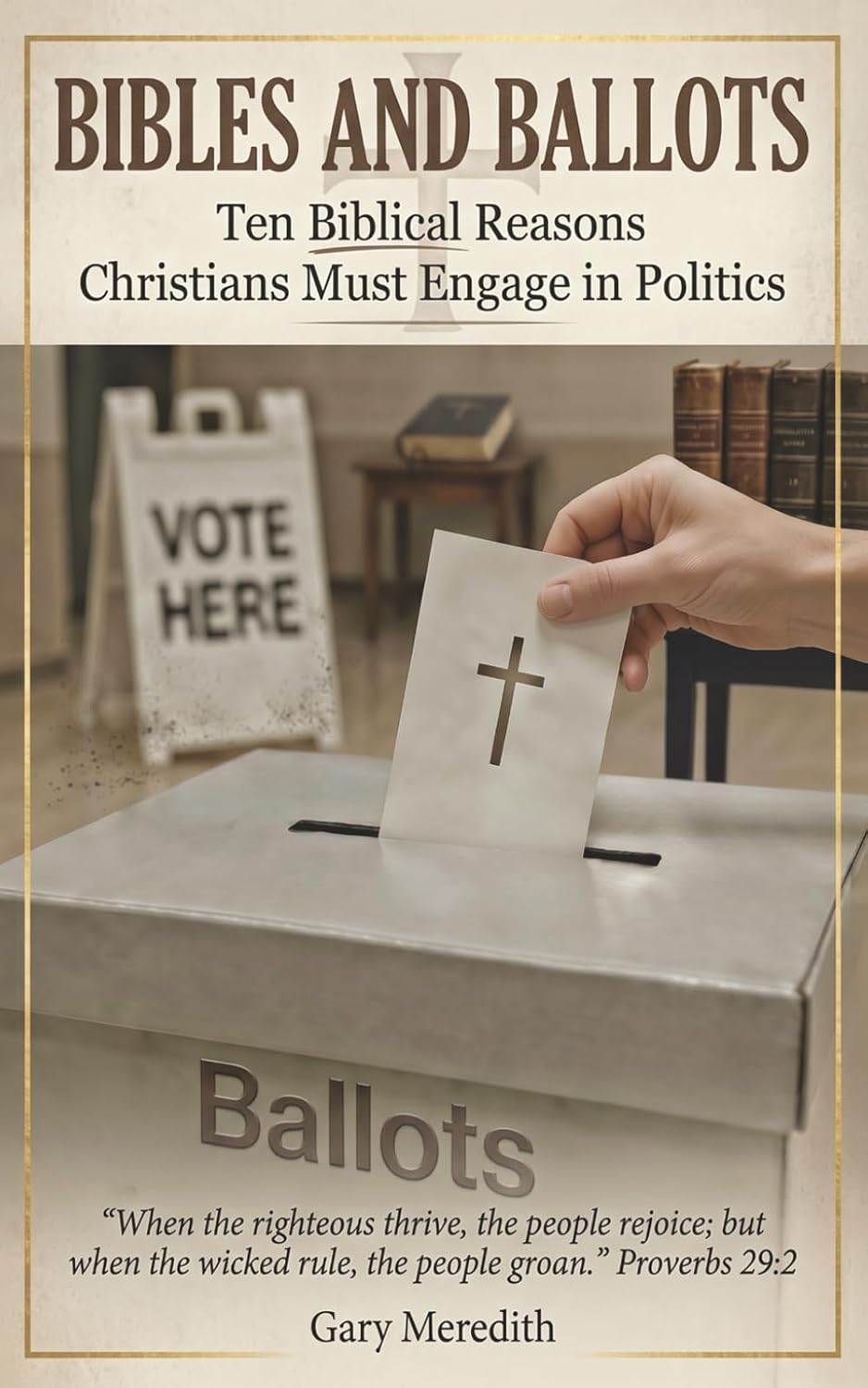
West Kendall, Florida — As a Bible-believing Christian, your reviewer approached Bibles and Ballots by Gary Meredith, , with an open mind, evaluating its arguments on Biblical merits, rather than accepting them simply because they aligned with my own views. Meredith's central claim is straightforward: Bible-believing Christians have no Biblical excuse for remaining apathetic toward politics and government. Throughout the book, he argues that Scripture not only permits political involvement, but also provides compelling reasons for believers to actively engage in shaping the society around them.
Every chapter of this book addresses common arguments used to justify disengagement from civic responsibility and responds with extensive scriptural support. Meredith's position is that Christians cannot simply withdraw from the public square and then lament the moral direction of the nation. If believers choose not to influence government and public policy, then others will do so in their place. The book argues that many of the cultural and moral challenges confronting society today are, in part, the result of Christians abandoning their responsibility to engage the institutions that help shape public life.
One of the book's greatest strengths is its reliance on Scripture. Every chapter contains numerous Biblical references and supporting quotations that invite readers to examine the issue for themselves. As I read the book, I was particularly impressed by the author's commitment to Biblical exegesis. In many discussions involving politics and religion, verses are often cited in isolation to support preconceived or subjective conclusions. Meredith consistently cites passages in context, allowing readers to see how he arrived at his conclusions.
One aspect of the book that stood out to me was its examination of biblical passages often cited to discourage Christian involvement in politics. The author argues that many believers point to verses about being citizens of heaven, or not being of this world, as reasons to remain detached from government and public affairs. He makes the case that while a Christian's ultimate allegiance belongs to Christ and His Kingdom, believers still have responsibilities within the societies in which they live. I found this discussion particularly interesting because it challenged some commonly held assumptions and encourages a closer examination of the Biblical text.
The link between government and morality resonated with me while reading the book. The more I considered the argument, the more I realized that every law reflects some underlying moral belief or someone’s moral code. The debate is not whether morality should be legislated, but which moral standard will guide those laws. Because government decisions affect virtually every aspect of society, from education and family issues to religious liberty and economic matters, I understood why the author insists that Christians cannot justify political apathy.
The book repeatedly challenges believers to view civic involvement as a matter of stewardship and responsibility. Meredith maintains that Christians are called to care about matters affecting the well-being of individuals, families, communities and nations. He argues that political disengagement is not a Biblical virtue, and encourages readers to consider voting, advocacy and even public office as legitimate avenues for Christian service.
One feature that particularly enhances the book's value is its practical format and how it engages the reader. At the end of every chapter, readers are presented with reflection questions. These questions encourage deeper consideration of the subject and make the book suitable for a variety of uses: individual study, Sunday school classes, small groups or church discussion groups.
From a reading standpoint, the book is refreshingly accessible. It is relatively short and a fast read that does not require an extensive time commitment. Meredith writes clearly, making complex questions about faith and civic responsibility easy to understand. I never found myself wondering what point he was trying to make. Whether discussing theology, government or public responsibility, the author communicates his ideas with clarity.
Overall, I thoroughly enjoyed Bibles and Ballots. It's an easy and engaging read that challenged me to think more deeply about faith, citizenship and civic responsibility. What impressed me most was not the sheer number of Scriptures cited, but the author's commitment to sound Biblical exegesis and explaining passages in their proper context.
The discussion questions, clear organization and straightforward writing style make the book both practical and thought provoking. While not everyone will agree with every conclusion, Meredith consistently encourages readers to search the Scriptures and evaluate the evidence for themselves. His commitment to exegesis strengthens the credibility of the book and raises important questions about believers’ responsibility while in this world.
I closed the book with a refreshed and renewed conviction that government is not a sphere believers should ignore or leave to others. If we are called to be salt and light, can we afford to remain on the sidelines while others shape the culture around us?












A compelling and very pertinent review, Alfredo. I'm getting a book copy.